The CNC machining center price on a quotation is only one input to the investment decision. A useful comparison adds mandatory options, inspection and acceptance, freight, duties, installation, training, tooling, utilities, spares, and the cost of downtime. The buyer should freeze the part envelope and acceptance evidence first, then compare the same five cost blocks across suppliers.
This buyer guide is for sourcing managers, manufacturing engineers, and plant leaders who need a defensible answer to “why do these two offers differ?” It does not publish a universal list price. Machine size, material, tolerance, country of delivery, and production duty change the answer. The goal is a transparent model that a supplier can complete and a finance team can audit.
For a broader company and capability context, review the Zhihe CNC English overview and the Zhihe CNC application notes alongside this cost model.
Start with the decision, not the sticker price
Write the decision in one sentence: “Select a machine that can make these parts at this rate, pass this acceptance test, and reach this site by this date.” That sentence keeps the review anchored to production rather than to a discount headline. For a new project, include the first production date, expected shifts, operator coverage, and whether the machine must support future part families.
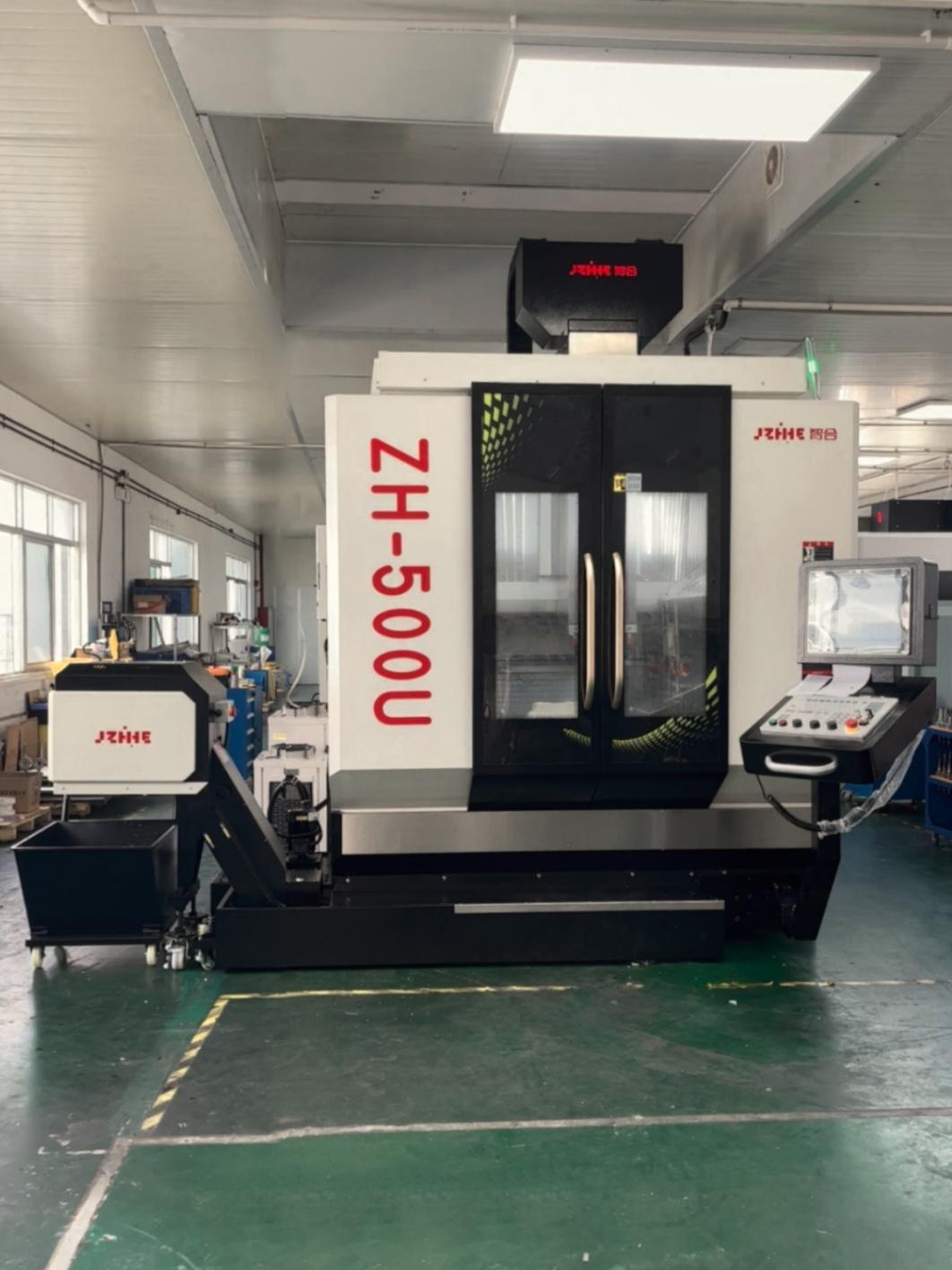
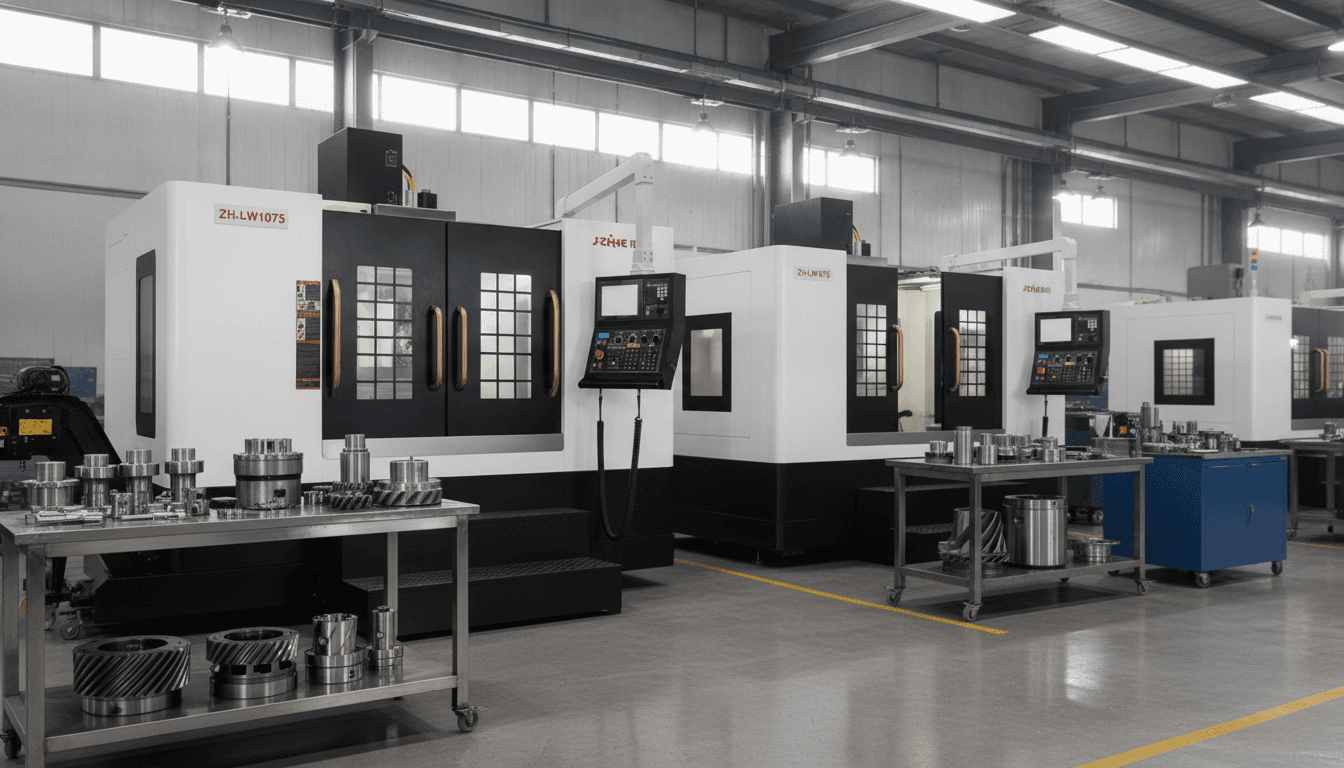
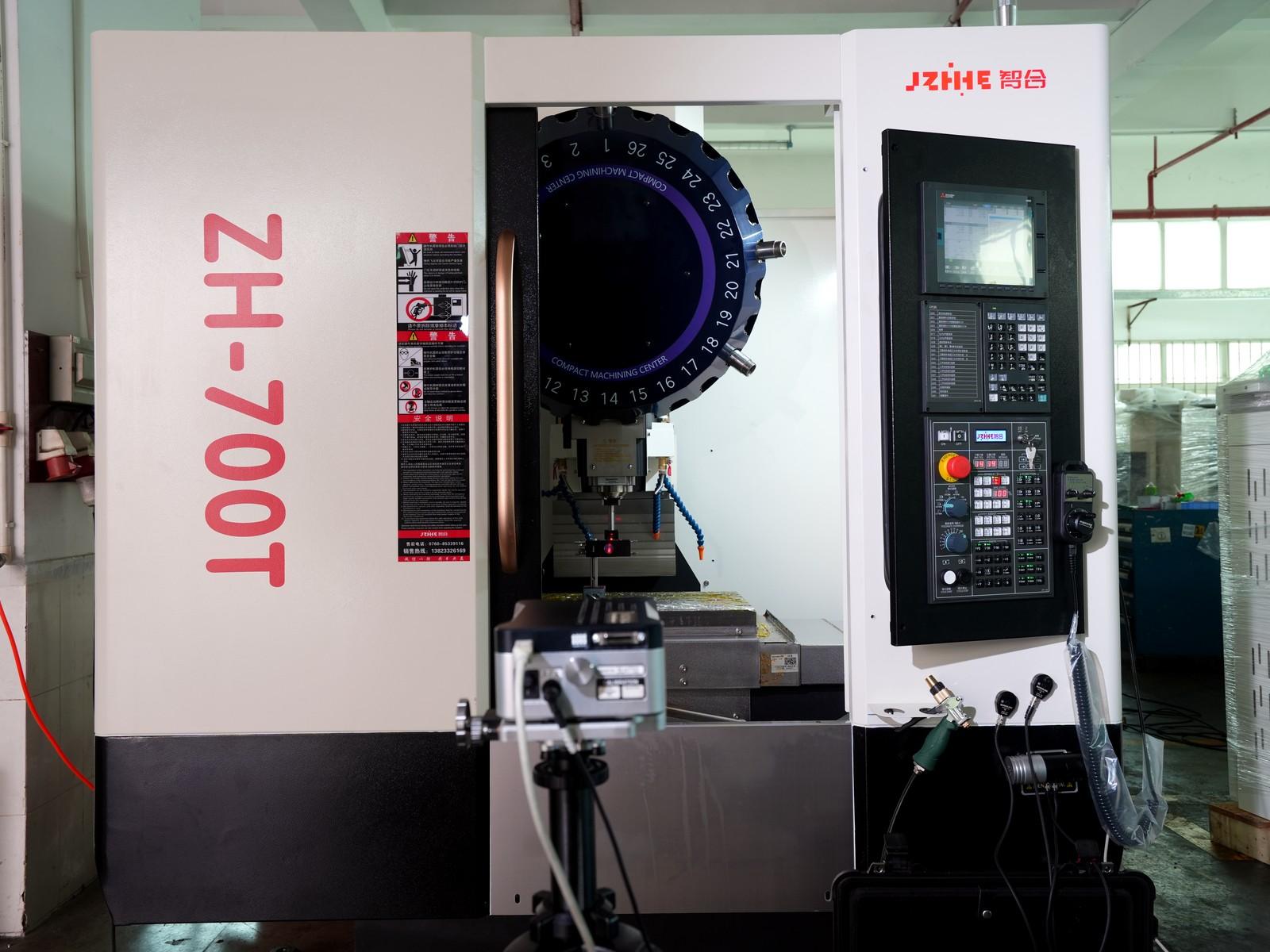
The Zhihe CNC machining center range is a useful starting point for a configuration discussion, but the final request should still describe the buyer’s own parts and constraints. A supplier cannot responsibly size a spindle, table, control, probing package, or chip-management system from a model name alone.
Freeze the workload assumptions
Before requesting a CNC machining center price, put the workload into a one-page input sheet. Record the largest and smallest workpiece, material groups, blank condition, feature depth, critical datums, tolerance bands, surface-finish targets, annual volume, batch size, and expected cycle time. Attach a drawing and a neutral 3D file when possible, but keep the written assumptions because they expose omissions in a CAD model.
Separate fixed requirements from options. A fourth axis may be mandatory for a family of angled faces, while a larger tool magazine may be a later expansion. A probe may be required for closed-loop offset updates, while an external presetting station may remain outside the first phase. This distinction lets suppliers show the base machine and the production-ready configuration without mixing them.
Use five dated input fields as the minimum evidence set: part revision, material specification, annual quantity, target cycle time, and delivery country. If any of the five changes, mark the quote as a new commercial baseline. This simple rule prevents a low price from surviving after the technical scope has moved.
Split the base machine from production options
Base-machine prices are hard to compare when each supplier defines “standard” differently. Require the model, controller revision, spindle duty basis, taper, axis travels, table load, rapid rates, tool capacity, guarding, electrical package, and included documentation. Ask the supplier to identify every item as included, optional, excluded, or to be confirmed.
The following table creates a common configuration boundary before the commercial review:
| Configuration block | Record in the quote | Why it changes cost or risk |
|---|---|---|
| Machine envelope | Travels, table size, load, door opening | Determines whether the part and fixture fit without special handling |
| Cutting package | Spindle power, torque curve, speed range, taper | Connects material, tool diameter, and chip load to usable capacity |
| Control and software | CNC version, probing cycles, remote access, licenses | Affects programming, measurement, support, and future updates |
| Workholding | Fixture concept, rotary axis, pallets, zero-point system | Changes setup time, repeatability, and automation readiness |
| Chip and coolant management | Tank, pump, filtration, chip conveyor, through-spindle coolant | Moves cost when material, deep holes, or unattended running demand it |
| Quality evidence | Factory test, sample part, reports, gauges, calibration records | Determines whether capability can be accepted rather than assumed |
For a production comparison, the CNC machining center price should be shown twice: once as the base machine and once as the configured machine that can actually run the stated work. The difference is not a sales problem; it is the information the buyer needs.
Price the options that protect throughput
Options deserve a production question, not a feature checklist. Ask what failure mode or bottleneck each option removes. For example, through-spindle coolant can reduce deep-hole evacuation risk; a chip conveyor can reduce manual cleaning; probing can shorten setup verification; a larger magazine can prevent an otherwise avoidable tool change or setup break.
Use a short business case for every option:
- Name the part or operation that requires it.
- State the measurable effect to verify, such as fewer manual interventions or a shorter setup.
- Identify the acceptance evidence and the owner of that evidence.
- Record the price, lead-time effect, utility demand, and maintenance implication.
The CNC milling machine documentation and precision machining workflow can help frame the application discussion, but do not substitute a generic product page for a part-specific trial plan.
Add the landed-cost boundary
The landed-cost model begins when the purchase order is released and ends when the machine is producing accepted parts. Keep commercial terms visible: Incoterm, port or airport, insurance, packing, duties, local taxes, rigging, foundation work, electrical work, air and coolant utilities, installation, leveling, commissioning, training, and initial consumables.
What belongs outside the machine line?
Create a separate owner and amount for every boundary item. If a value is unknown, mark it as an open assumption rather than silently setting it to zero. The U.S. Customs and Border Protection importing overview is a useful reminder that destination charges and import responsibilities depend on the transaction and country; confirm the actual treatment with the buyer’s broker.
| Landed-cost block | Buyer field | Evidence to retain |
|---|---|---|
| Commercial and freight | Incoterm, route, insurance, packaging, estimated transit | Signed quote, freight offer, packing list |
| Site readiness | Floor load, foundation, power, air, cooling, exhaust, network | Site survey with owner and date |
| Installation | Rigging, leveling, commissioning, software setup, acceptance visit | Installation record and open-item log |
| Production enablement | Fixtures, holders, cutters, presetting, gauges, programs | Tool and fixture list linked to part revision |
| Ownership reserve | Preventive maintenance, calibration, filters, coolant, spares, training refresh | Maintenance plan and service terms |

This is where two apparently similar offers can diverge. A low CNC machining center price may exclude a transformer, a chip conveyor, a rotary table, local code changes, or the first set of holders. A higher configured offer may be less expensive to put into production. Ask for both views and keep the assumptions side by side.
Use inspection as a cost-control gate
Cost is protected by evidence when the machine reaches the floor. Define factory acceptance and site acceptance separately. Factory acceptance may verify configuration, geometry, positioning, spindle behavior, safety functions, and a representative sample. Site acceptance should confirm utilities, leveling, guarding, software, operator handover, and the same critical features under agreed conditions.

The NIST guidance on measurement traceability states that a measurement result needs a documented connection to a reference through an unbroken chain of calibrations. Apply that principle to the acceptance plan: name the instrument, method, environment, sample, revision, and limit. Do not accept “high precision” as a substitute for an agreed test.
Keep at least five evidence fields with the acceptance record: machine serial number, program revision, material or test artifact, gauge identification, and measured result. When a deviation appears, record containment, corrective action, retest date, and commercial impact. This makes the CNC machining center price defensible after delivery rather than only attractive before the order.
Model payback with scenarios, not promises
Finance needs a range, not a single optimistic return. Build three scenarios using the same assumptions: conservative, expected, and capacity case. For each, record accepted parts per shift, contribution per part, productive hours, labor coverage, scrap or rework allowance, maintenance reserve, and financing terms. Do not call a machine “paid back” until the calculation includes commissioning time and the cost of unavailable capacity during a service event.
An illustrative model can use five transparent variables rather than an invented market benchmark: configured investment, productive hours per year, contribution per hour, annual ownership reserve, and expected uptime. Change one variable at a time and show the sensitivity. A buyer can then see whether the business case depends on a fragile cycle-time promise or on a repeatable setup reduction.
Which payback question should be answered first?
Ask whether the machine is solving a capacity gap, a quality problem, a labor constraint, or a new-product requirement. Capacity cases should test hours and bottleneck relief. Quality cases should test scrap, rework, and inspection containment. Labor cases should test setup and attendance. New-product cases should test launch risk and evidence lead time. The answer determines which parts of the CNC machining center price matter most.
Normalize competing offers with a scorecard
Do not rank suppliers from the first page of the quote. Build a normalized sheet where each bidder receives the same drawings, revision, site assumptions, acceptance plan, and response deadline. Score technical fit, evidence quality, landed cost, service route, delivery confidence, and change-control discipline separately.
| Review dimension | Pass condition | Escalation trigger |
|---|---|---|
| Technical fit | All must-have part and utility fields are answered | A required field is “to be confirmed” after clarification |
| Configuration | Base and mandatory options are itemized | A critical option is buried in a package or footnote |
| Acceptance | Method, sample, gauge, limit, and remedy are named | Only a pass certificate is offered |
| Landed cost | Destination responsibilities and exclusions are explicit | Freight, duty, rigging, or installation is blank |
| Service | Response route, parts path, and warranty trigger are written | Support depends on an unnamed third party |
| Change control | Revision, approver, and price impact are recorded | A verbal change is needed to close the order |
Use the scorecard to create a clarification list. A supplier that answers difficult questions with dated records gives the buyer more confidence than one that simply repeats a low CNC machining center price. Keep the final scorecard with the purchase order and acceptance file.
Put the RFQ fields into the contract
The request for quotation should become a controlled attachment to the order. Include the part and material revisions, required configuration, option list, site boundary, delivery milestone, training scope, warranty start trigger, acceptance tests, remedies, spare-parts list, and document language. Add a change log with revision, date, owner, description, and impact on price, delivery, and acceptance.

For quality-system context, review the ISO 9001 quality-management principles. The standard does not set a machine price, but its emphasis on controlled processes and documented information is directly relevant to a purchase that must remain auditable.
The Zhihe CNC contact route can be used to submit the drawing, material, tolerance, volume, and destination fields. Include the target acceptance evidence so the resulting offer answers the real production question.
Make the decision auditable
Before approval, the team should be able to answer six questions without reopening email: What exact configuration is being bought? Which options are mandatory? Who pays for each destination activity? How will capability be accepted? What is the ownership reserve? What happens when a requirement changes?
Archive the signed quote, comparison sheet, site survey, test plan, clarification log, and approved model. Link the files to the machine serial number after delivery. This evidence protects the buyer when a later dispute sounds like a price dispute but is actually a scope or acceptance dispute.
The right CNC machining center price is therefore a traceable number inside a larger model. Request a configuration-specific offer from Zhihe CNC with your drawings, material, critical tolerances, annual volume, target cycle time, destination, and acceptance plan. A transparent brief gives both sides a fair chance to optimize the machine without hiding the costs that make it productive.
CNC machining center price questions buyers ask
Is there a standard CNC machining center price?
There is no responsible universal price. The machine envelope, spindle duty, control, workholding, inspection, destination, utilities, and acceptance scope can change the configured investment substantially. Request a model-specific offer.
Why do two quotes with the same travel differ?
They may use different spindle duty, control versions, table loads, tool capacity, probing, coolant, chip handling, guarding, documentation, or service boundaries. Normalize every mandatory line before comparing totals.
Should I compare only the base machine?
No. Compare the base machine and the production-ready configuration separately, then add freight, duty, site work, installation, training, tooling, utilities, and ownership reserves.
Which options usually deserve early review?
Review the options tied to a known bottleneck: workholding, probing, through-spindle coolant, chip evacuation, tool capacity, automation interfaces, and inspection. Each should have a part-specific reason and an acceptance measure.
How can I avoid hidden destination costs?
State the Incoterm, destination, broker responsibility, rigging, foundation, electrical work, utilities, installation, and local compliance work in the RFQ. Require blank fields to be marked excluded or to be confirmed.
What should factory acceptance prove?
It should prove the shipped configuration and agreed capability under named conditions. Define the sample, program, material, gauge, environment, limits, report format, and remedy before the test.
When should site acceptance happen?
After installation, leveling, utilities, guarding, software setup, training, and a representative production trial are complete. Align the warranty trigger with the agreed acceptance event.
How do I connect price to payback?
Use conservative, expected, and capacity scenarios. Link configured investment to accepted throughput, contribution, productive hours, ownership reserve, financing, and downtime rather than to a headline cycle time.
What information should I send for a quote?
Send drawings, material, blank condition, critical tolerances, surface-finish targets, quantity, batch size, cycle-time goal, shift pattern, destination, utilities, automation needs, and acceptance expectations.
What is the next step after comparing offers?
Issue a clarification list, freeze a revised scope, run the agreed evidence review, and request a signed offer that carries the configuration, landed-cost assumptions, acceptance plan, warranty trigger, and change-control rules.